By KYMYO Industrial Co., Ltd. (Combest Tools)
In the fast-paced world of industrial manufacturing, the phrase "Digital Transformation" often conjures images of autonomous robots, cloud computing, and fully electric assembly lines. However, for those of us on the factory floor and in the procurement offices, the reality is more nuanced. We know that pneumatic tools—the workhorses of grinding, sanding, and finishing—remain indispensable due to their power-to-weight ratio, durability, and safety.
But here lies the modern challenge: How do we integrate these traditionally "analog" air tools into a digitized, Industry 4.0 environment?
At KYMYO, we have witnessed a seismic shift. The conversation is no longer just about RPM or pad size; it is about data, efficiency, and integration. This month, we explore how the industry is moving from standalone manual tools to an ecosystem of "Smart Pneumatic Tools"—systems capable of pressure monitoring, energy management, and predictive maintenance.
The Production Manager’s Dilemma: A Scenario
Imagine a busy automotive components factory. The production manager, let’s call him David, is facing a recurring nightmare. His team uses high-performance air random orbital sanders for the final finish on aluminum parts.
Every Tuesday, quality control rejects 15% of the batch due to uneven surface textures. David blames the operators; the operators blame the tools.
In a traditional setup, this is a guessing game. Is it operator fatigue? Is the abrasive paper worn out? Or, is the facility’s air pressure dropping intermittently because the compressor is overloaded elsewhere?
In a digitized pneumatic environment, David doesn’t guess. He looks at a dashboard. He sees that at 10:15 AM, the air pressure at Station 4 dropped below the critical 90 PSI required for the sander to maintain optimal torque. The system alerted the maintenance team before the defects occurred.
This is not science fiction. This is the current trajectory of the pneumatic tool industry.
Why Pneumatics are Getting "Smart"
For decades, finding a reliable air sander manufacturer meant looking for mechanical precision: high-quality bearings, balanced rotors, and ergonomic grips. While these mechanical features remain the foundation of a good tool, the layer on top is changing.
The push for digital transformation in pneumatics is driven by three critical pain points that every procurement officer recognizes:
- Inconsistent Quality: Fluctuations in air supply lead to inconsistent RPM, resulting in swirl marks or uneven material removal.
- Energy Waste: Compressed air is often called the "fourth utility," and it is expensive. Leaks and inefficient tools drain budgets.
- Unplanned Downtime: Waiting for a tool to seize up before fixing it halts production lines.
1. Air Pressure Monitoring and Process Control
The first step in digitizing pneumatic tools is visibility. Modern setups now include digital flow meters and pressure sensors at the drop point.
For applications requiring extreme precision, such as using a jitterbug orbital air sander for fine wood finishing or automotive clear coats, maintaining constant pressure is non-negotiable. If the pressure drops, the orbit speed slows, and the sanding pattern changes. Smart sensors can now interlock with the tool—if the pressure isn't right, the tool won't start, or an alert is sent to the line supervisor.
2. Managing Air Consumption (The Cost Saver)
As a B2B buyer, you are likely under pressure to reduce operational costs (OPEX). Pneumatic tools are powerful, but they consume energy.
By integrating smart flow sensors, factories can measure the exact CFM (Cubic Feet per Minute) consumption of their air belt sander manufacturer equipment versus their finishing stations. Data analytics can reveal:
- Leak Detection: If air consumption continues when the shift ends, you have a leak.
- Tool Efficiency: If a specific tool begins consuming 20% more air to do the same job, its internal seals or vanes are likely wearing out.
3. Predictive Maintenance
This is the "Holy Grail" of modern manufacturing. Instead of scheduled maintenance (which might be unnecessary) or reactive maintenance (which causes downtime), we move to predictive maintenance.
By analyzing the vibration signature and air consumption data of an air line sander, AI-driven algorithms can predict bearing failure weeks in advance. This allows procurement to order spare parts and schedule repairs during planned shutdowns, ensuring zero impact on production targets.
The Hardware Evolution: From Handheld to Robotic
Digital transformation is also changing how we apply the tool. We are seeing a massive surge in demand for the robotic orbital sander.
While manual sanding requires a skilled human hand, it is difficult to digitize human "feel." By mounting a compliant pneumatic sander on a robotic arm equipped with force-torque sensors, manufacturers can:
- Digitally program the exact pressure applied to the surface.
- Record the sanding path and dwell time for every single unit produced.
- Guarantee 100% repeatability.
This does not make the air random orbital sander obsolete; rather, it elevates it. The sanding head remains pneumatic (for its lightweight and cooling properties), but the control system becomes digital.
Comparative Analysis: Traditional vs. Smart Pneumatic Ecosystems
To help you understand the value proposition, we have compiled a comparison of how a traditional workshop differs from a digitally integrated one.
| Feature |
Traditional Pneumatic Setup |
Smart/Digitally Integrated Setup |
| Air Supply |
Static regulation; "Set and Forget." |
Dynamic monitoring; Real-time pressure data logging. |
| Maintenance Strategy | Reactive: "Fix it when it breaks." | Predictive: Sensors detect wear via air/vibration changes. |
| Quality Control | Post-process inspection (Reactive). | In-process monitoring (Proactive). |
| Energy Management | Unknown leakage rates; high overhead. | Leakage detection algorithms; optimized consumption. |
| Tool Type | Standard manual tools. | IoT-ready tools or Robotic End-Effectors. |
| Data Usage | None. | Traceability for every part produced. |
Industry Trends: The Integration of IoT and Pneumatics
As a team analyzing market trends, we see a convergence of technologies. The air sander manufacturer of the future isn't just selling a metal tool; they are selling a component of the Industrial Internet of Things (IIoT).
The "Brownfield" Opportunity
Most factories cannot afford to rip out their entire infrastructure to build a "Smart Factory" from scratch. This is where pneumatic tools shine. Unlike fully electric systems that might require heavy re-wiring, pneumatic systems can be retrofitted
Simple, smart FRL (Filter, Regulator, Lubricator) units with Bluetooth or Wi-Fi connectivity can be installed on existing air lines. This instantly upgrades a standard station using a jitterbug orbital air sander into a data-generating node on the network.
The Sustainability Angle
ESG (Environmental, Social, and Governance) criteria are becoming major factors in B2B procurement. Digitizing pneumatic systems allows companies to quantify their carbon footprint reduction by proving they have minimized compressed air waste. This is a powerful narrative for your annual sustainability reports.
FAQ: Common Questions About Pneumatic Digital Transformation
In our discussions with clients, we frequently encounter similar questions regarding the shift to smart tools. Here are the answers to the most pressing concerns.
Q1: Do I need to replace all my current air tools to digitize my production line?
No. Digital transformation often starts at the air supply level. By installing smart sensors and connected FRL units on your air lines, you can monitor the performance of your existing air random orbital sander or other tools. However, for advanced robotic integration, specific robotic-ready sanders are required.
Q2: Isn't electric tooling better for digital integration than pneumatic?
Not necessarily. While electric tools have built-in data capabilities, they are heavier, overheat during continuous use, and are more expensive to repair. Smart Pneumatics offer the best of both worlds: the durability and ergonomics of air tools combined with external sensors for data capture.
Q3: How does an air belt sander manufacturer contribute to this trend?
Manufacturers are now designing tools with tighter tolerances and "sensor-ready" ports. For heavy material removal, an air belt sander manufacturer focuses on ensuring the tool maintains consistent torque under load, which is critical when data systems are monitoring for efficiency drops.
Q4: What is the ROI (Return on Investment) for smart pneumatic systems?
The ROI typically comes from three areas:
- Energy Savings: Fixing leaks and optimizing pressure can save 20-30% on compressor energy bills.
- Reduced Scrap: Consistent pressure means fewer defects.
- Extended Tool Life: Proper lubrication and maintenance alerts prevent premature tool death.
Q5: Can these systems help with labor shortages?
Yes. By using air line sanders or orbital sanders integrated with robotic arms or collaborative robots (cobots), you can automate repetitive, physically demanding tasks, allowing your skilled workforce to focus on programming and quality assurance.
Choosing the Right Partner for the Future
Navigating the transition to a digitized manufacturing floor requires more than just software; it requires hardware that you can trust. No amount of data analytics can fix a poorly constructed tool.
At KYMYO Industrial Co., Ltd. (Combest Tools), we bridge the gap between traditional craftsmanship and modern requirements. We understand that before a tool can be "smart," it must be "sound."
Our engineering team has spent years refining the internal mechanisms of our tools to ensure they deliver the consistency required for modern, data-driven production environments.
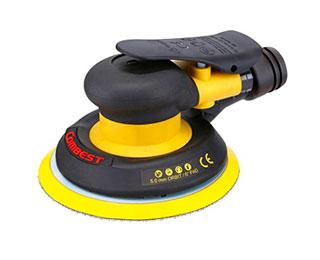
Precision Finishing:
Our Air Random Orbital Sanders are engineered with minimized vibration, making them ideal candidates for precision-monitored finishing lines where surface consistency is paramount.
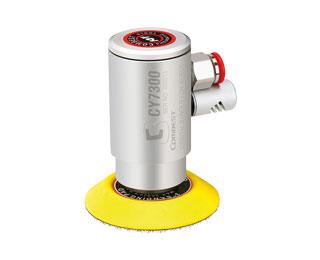
Automation Ready:
As the industry moves toward automation, our Robotic Orbital Sander series provides the compliance and durability needed for 24/7 robotic cells.
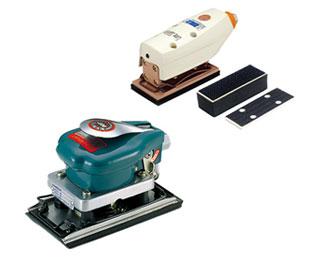
Specialized Applications:
Whether you need the fine detailing capabilities of a Jitterbug Orbital Air Sander or the linear precision of an Air Line Sander, our tools are built to maintain performance parameters that smart sensors can rely on.

Heavy Duty:
For those seeking a reliable Air Belt Sander Manufacturer, our designs prioritize torque stability, ensuring that your removal rates remain constant even as we move into an era of digital monitoring.
Conclusion
Digital transformation is not about abandoning the pneumatic tools that have built the modern world; it is about empowering them. By surrounding high-quality pneumatic tools with smart monitoring and data analytics, manufacturers can achieve levels of efficiency and quality previously thought impossible.
As a leading Air Sander Manufacturer, KYMYO is dedicated to supporting your journey toward a smarter, more efficient factory. We provide the reliable, high-precision tools that serve as the foundation for your digital success.
Are you ready to upgrade your production quality or discuss how our tools fit into your modernization plans?
Contact KYMYO today. Let’s build the future of manufacturing together.